Yesterday I was pretty certain the WOW factor of visiting New Zealand had reached its pinnacle. Yet today was right up there with its wow-ness.
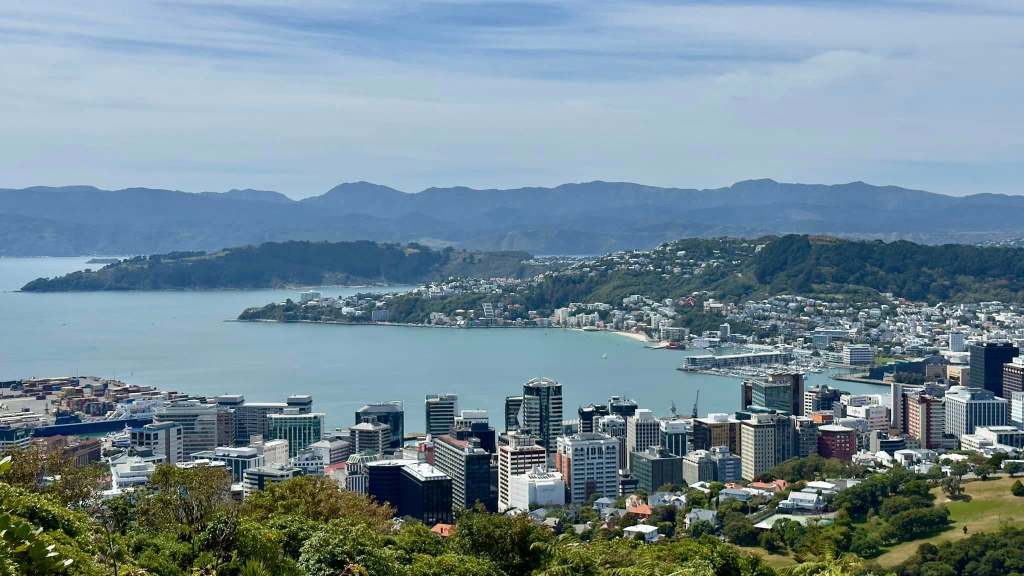
We find ourselves in the capital city of New Zealand, Wellington. One of the main streets in Wellington is right over the main fault line of the area. They experience several hundred quakes each year but most are not felt by the residents. But they have a big one about every ten years. Most of the buildings are made of wood which are better able to withstand shaking than are bricks or stone.
We opted to partake in a morning and afternoon excursion. Our morning excursion was lead by a member of the Māori people. He was a great guide and driver. He told stories of his personal life and of the country. He had the entire van (10 people) laughing all morning. The van was brand new and still had the new car smell.
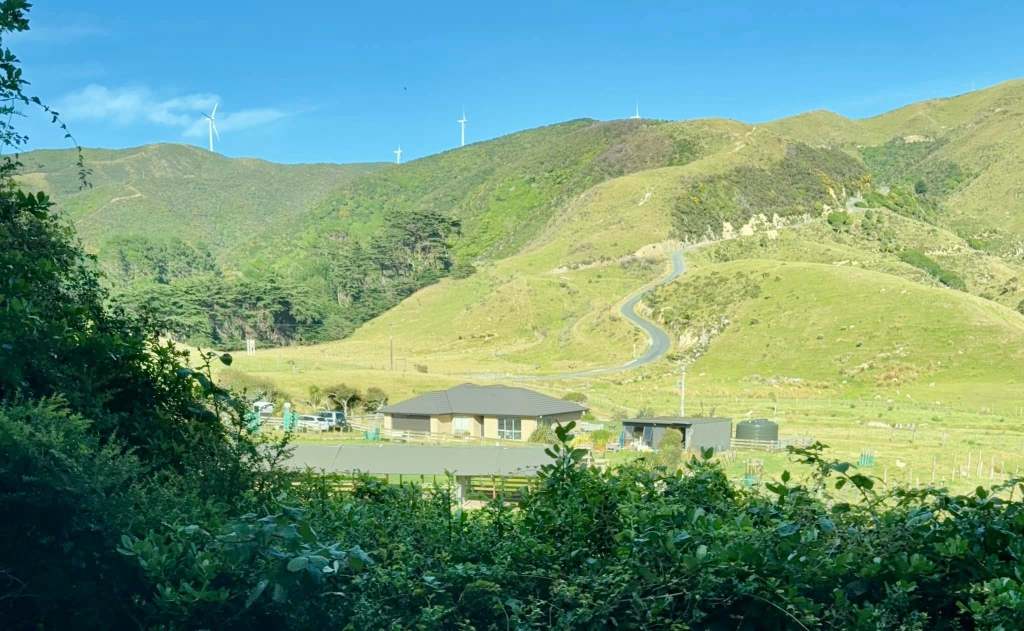
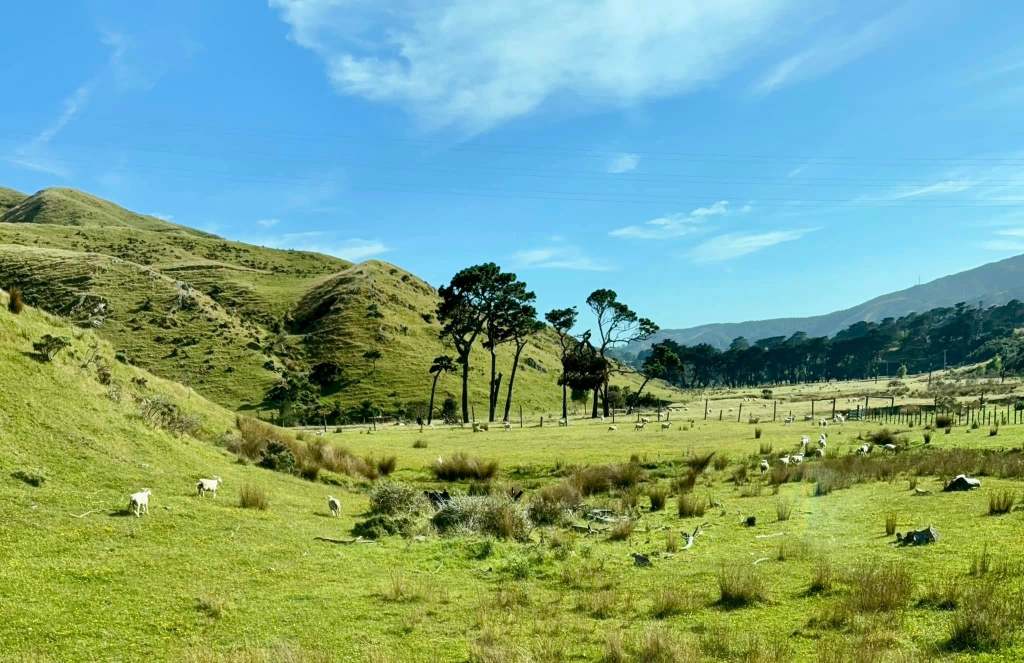
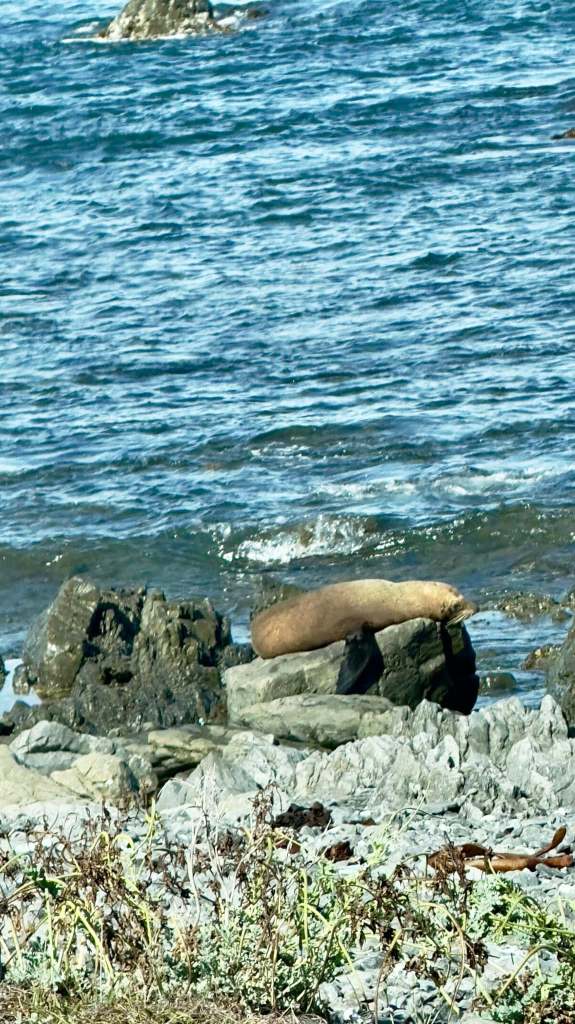
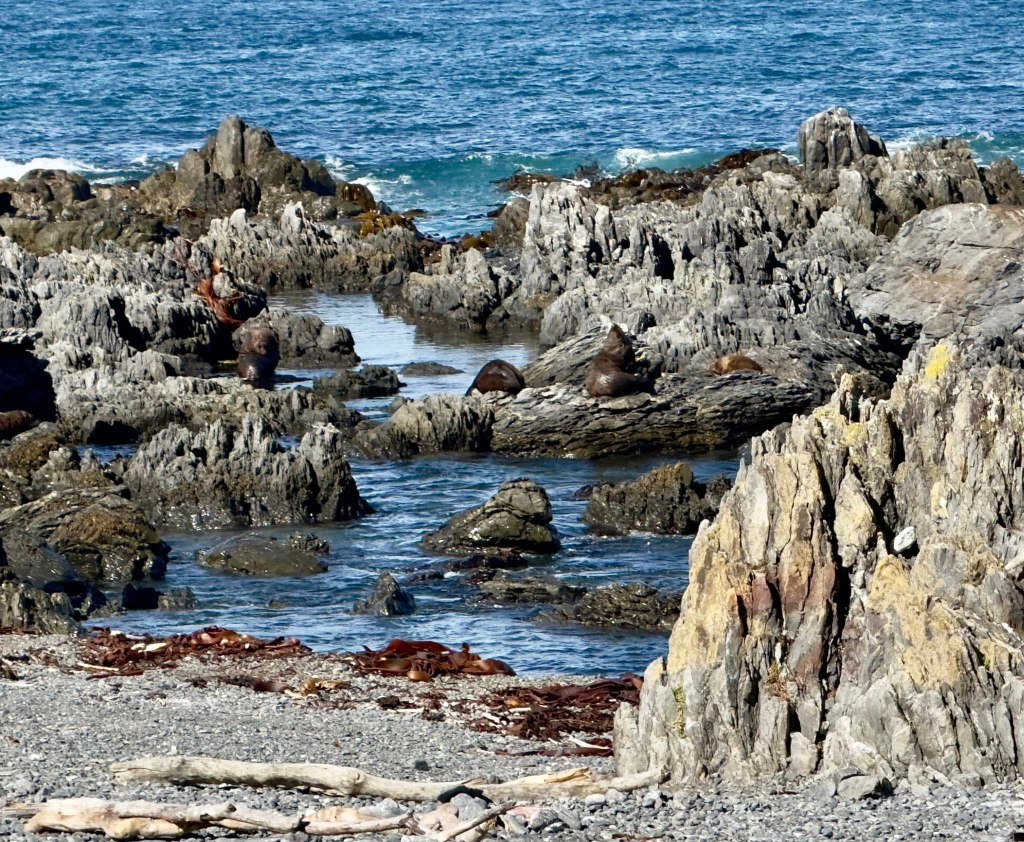
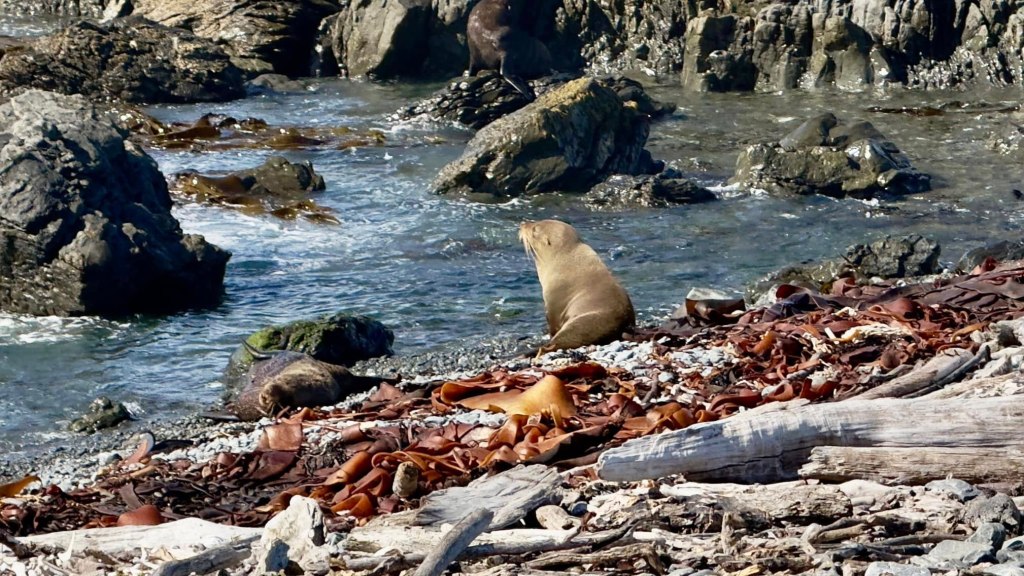
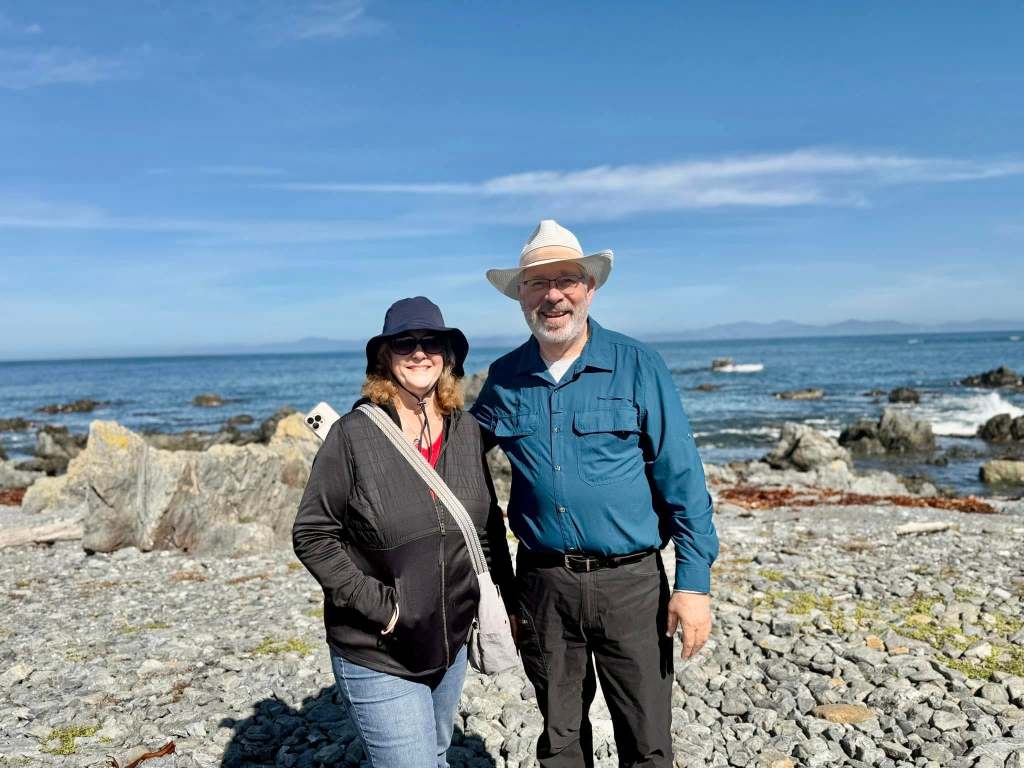
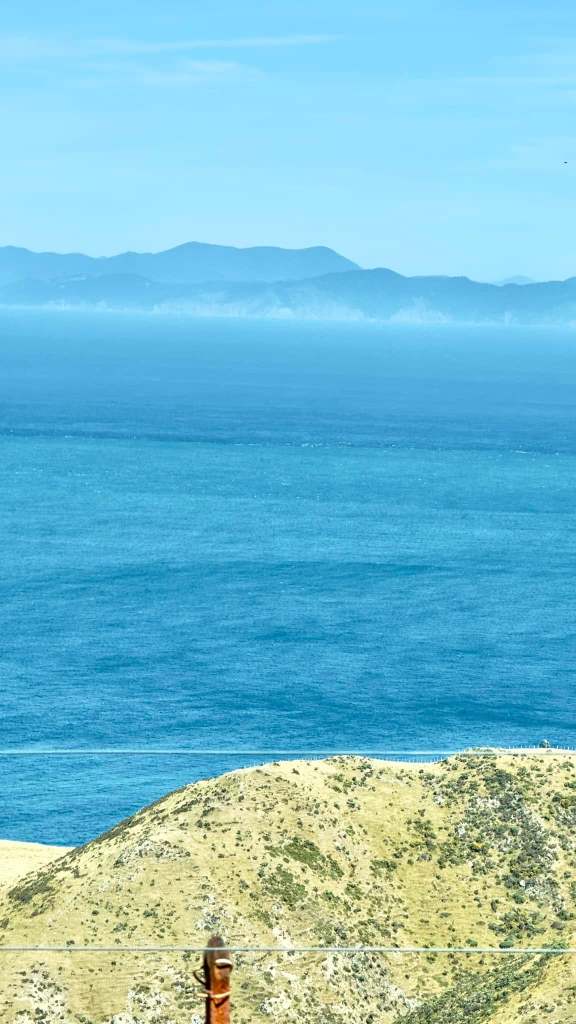
Our goal was to visit a colony of seals on the coast. We were docked on the east side and the colony lives on the west side. The other interesting tidbit is that Wellington is nestled on the coastline and the mountains rise steeply behind the city. Our seals lay on the other side of the mountains. So we had about an hour drive over the gorgeous New Zealand mountains. The views and animals, domestic and feril, were spectacular.
Some of the stories were about the mistakes the people in the late 1800s and early 1900s made. You may know that in the USA that the plant kudzu was a plant brought on purpose to the USA as a means to control erosion on banks. It did that but soon took over and choked out all other vegetation.
Well the good people of new
Zealand also fell victim to this problem. Cats were introduced into NZ as pets but they soon became feral and began to prey on the native bird population including the flightless kiwi bird. Our guide told us that the kiwi is the mascot of the NZ Air Force. He thought that was pretty ironic.
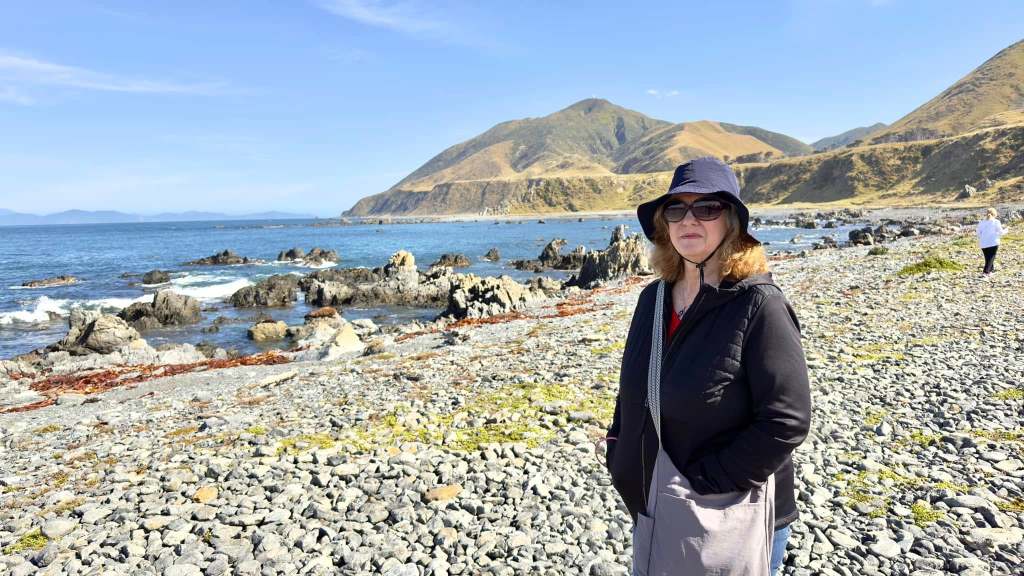
We came over the mountains and made our way to the seashore. There are no sandy beaches on the island because of the volcanic nature of the place. But the rugged rocks make a great place for seals to sun themselves and to hunt around them.
The majority of our over the mountain trek took us through a farmer’s very large “station”. Which we might call a ranch. Sheep, goats and cattle were all over the place.
But the coastline was, not too many years ago, returned to the Māori people. Prior to that the European people had put fences that separated fields and ran the fence all the way to the ocean edges. This prevented the Māori people from hunting and fishing around the coastline. It was a delightful and hilarious morning.
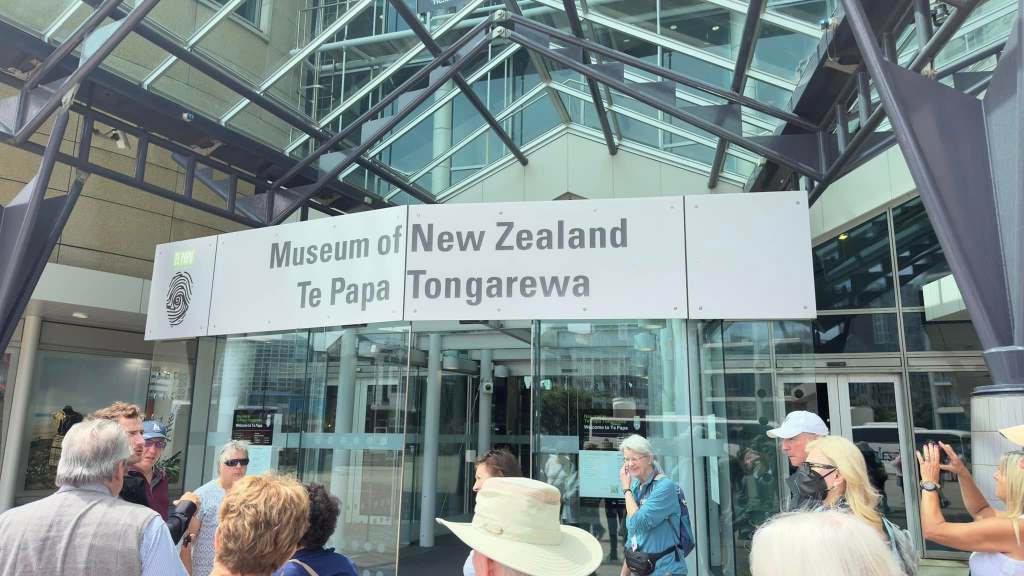
After lunch our second excursion took us to the Te Papa Tongarewa or Museum of New Zealand. The Māori name means “container of treasures”. Which is a pretty wonderful description for a museum.
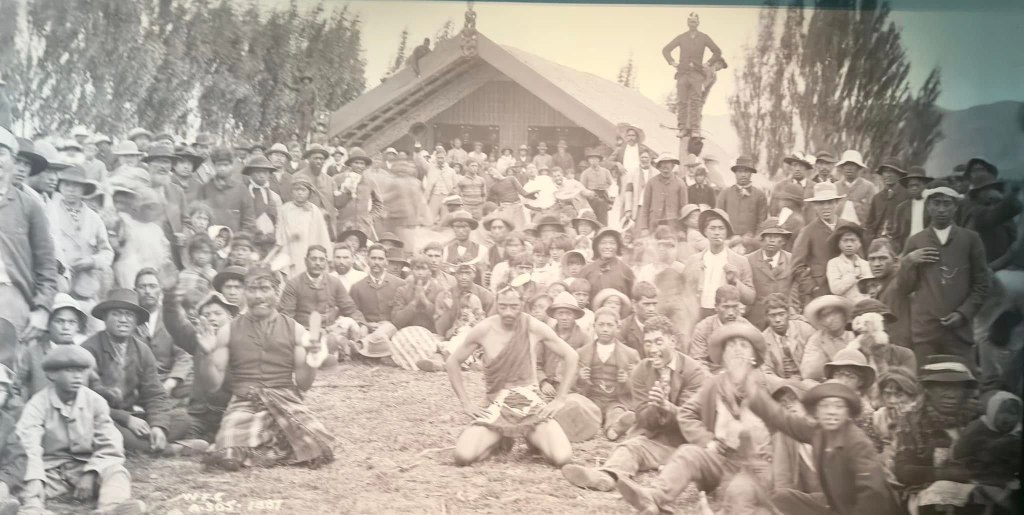
The museum tells the story of of the Māori people and of the entire nation’s participation in the wars of the 20th century.
There were stories about immigrants coming from all over the world and being welcomed to New Zealand.
The Māori story of sailing from Polynesian islands between 1320 and 1350 was chronicled. The Māori people were very sophisticated sailors. They used half a coconut shell with holes drilled in the edge to sight through it at a star. They put water in the shell so they could make sure it was level.
The story of 6 February 1840 was when the Māori and the English royal family signed the Treaty of Waitangi. The treaty was written in English and translated into the language of the Māori. The two copies were not identical in meaning. It is important that it was the royal family and not the English government that signed the treaty. It is still a treaty with the crown.
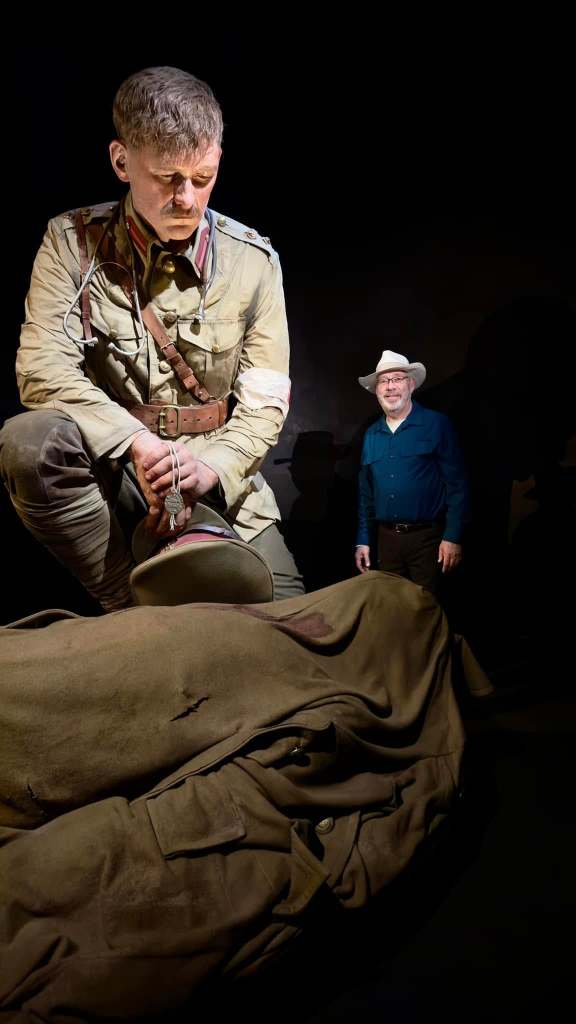
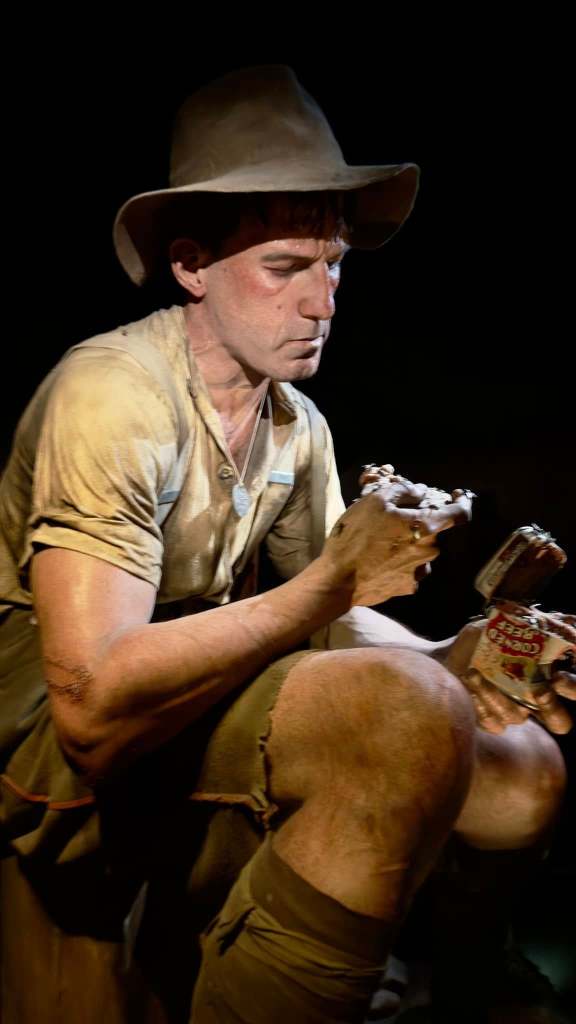
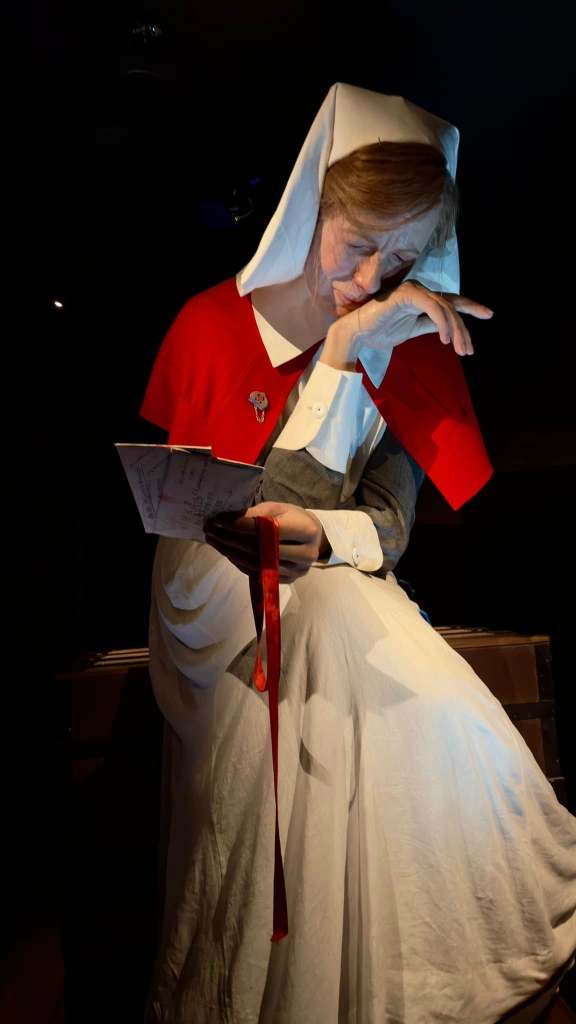
Another exhibit was a series of stories about New Zealanders who participated in World War I. There were huge statues of people created to be very very realistic right down to hair on the arms and sweat on the brows. It was very moving.
A very good day for our first visit to the northern island of New Zealand.








 Traveling with Ray Owens
Leave a comment